


The first fortnight sets the ceiling.
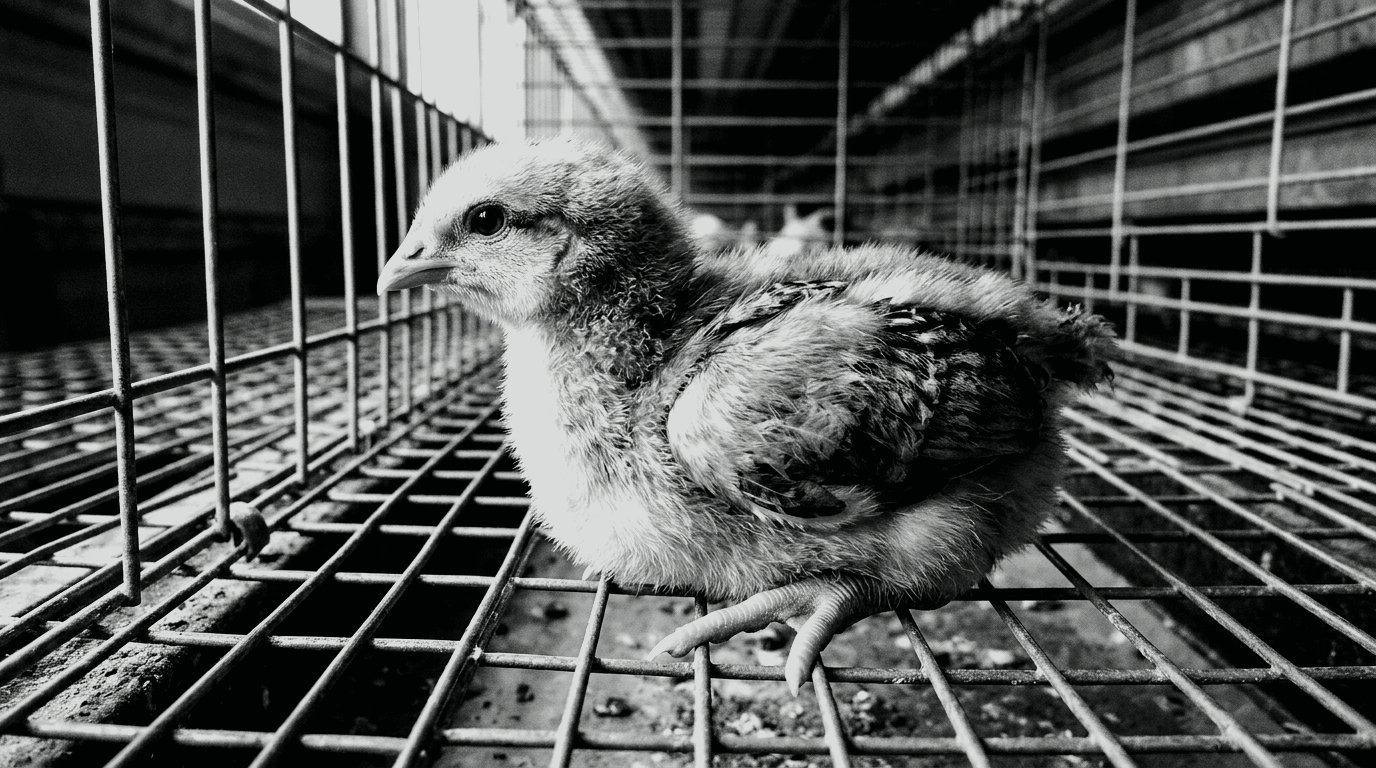
A chick arrives with a gut that is close to empty, and it does not stay that way for long. Whatever reaches it first — from the hatchery, the litter, the water line, the feed — becomes the community the bird carries forward. EKOSHIELD Chick is a pellet-stable additive that puts three defined organisms into that space deliberately, at a count you can check on the Certificate of Analysis rather than take on trust.
HOW IT WORKS
Colonisation happens once. You may as well have a say in it.
Starter feed is the most expensive ration the bird will ever eat, and early uniformity has a way of showing up again at the end of the cycle. Below are the established modes of action for the organism classes in EKOSHIELD. They describe how the product is intended to work. They are not performance guarantees.
Occupies the space early
A gut with room in it is settled by whatever gets there first. Adding a defined community while that room still exists is the only point at which the choice is yours.
Produces antimicrobial metabolites
Bacteriocins and organic acids make the gut a less comfortable place for undesirable bacteria.
Supports the absorptive surface
Villus height and crypt depth in the first weeks govern how much of an expensive starter ration the bird actually recovers.
Modulates local immune response
Gut-associated lymphoid tissue develops alongside the community that occupies the gut.
Specification
What is in the sack.
Strain designations, inclusion rate and the batch Certificate of Analysis are issued with the technical dossier on request.
REQUEST THE TECHNICAL DOSSIER →Regulatory position
What we may and may not tell you.
This product is intended to:
- Stabilise gut flora
- Support zootechnical performance and feed conversion
- Support nutrient absorption
- Promote a healthy microbiome
It is not:
A veterinary medicinal product. EKOSHIELD is a zootechnical feed additive in the gut flora stabiliser functional group. We make no claim that it treats or prevents any disease, reduces mortality, or replaces antibiotics for a therapeutic purpose — and we would ask you to be sceptical of any supplier who does.
The evidence behind the selection
Published results for the species — not ours.
Ekome is pre-launch and has run no commercial trials, so nothing below is an EKOSHIELD result. These are peer-reviewed findings obtained by independent groups in broiler chickens, using their own strains of the species we selected. They are the reason those species are in the product, and nothing more than that.
1.71 → 1.55
Broiler FCR
Day-42 body weight 2176 vs 2023 g, +7.6% (P = 0.003). B. subtilis.
Chen et al. 2025, Poultry Science
1.72 vs 1.81
Broiler FCR, 0–6 weeks
B. licheniformis, administered in water (P < 0.05).
Liu et al. 2012, AJAS
We hold no published study that tests the three organisms in EKOSHIELD together, and we say so before you ask. Our technical team will walk you through the gaps in the evidence as readily as the results, and will help design a trial on your own units if you want a figure that belongs to your flock.
What comes next
Start it early, then keep it there.
There is little value in furnishing a gut in week one and then abandoning it in week three. EKOSHIELD carries the same three organisms and the same declared count through grow-out and through lay, so the ration changes without the microbial strategy changing with it.
For replacement pullets heading to lay, EKOSTART offers a wider six-organism lactic acid bacteria consortium for the rearing period — added to dry mixes rather than pelleted feed.