
Skip to content
Ekome Bio
Precision probiotics for commercial poultry

Health begins in stability.

The first fortnight decides the flock. Ekome builds the gut community that carries a bird through it — defined strains, declared counts, nothing hidden behind a “proprietary blend”.

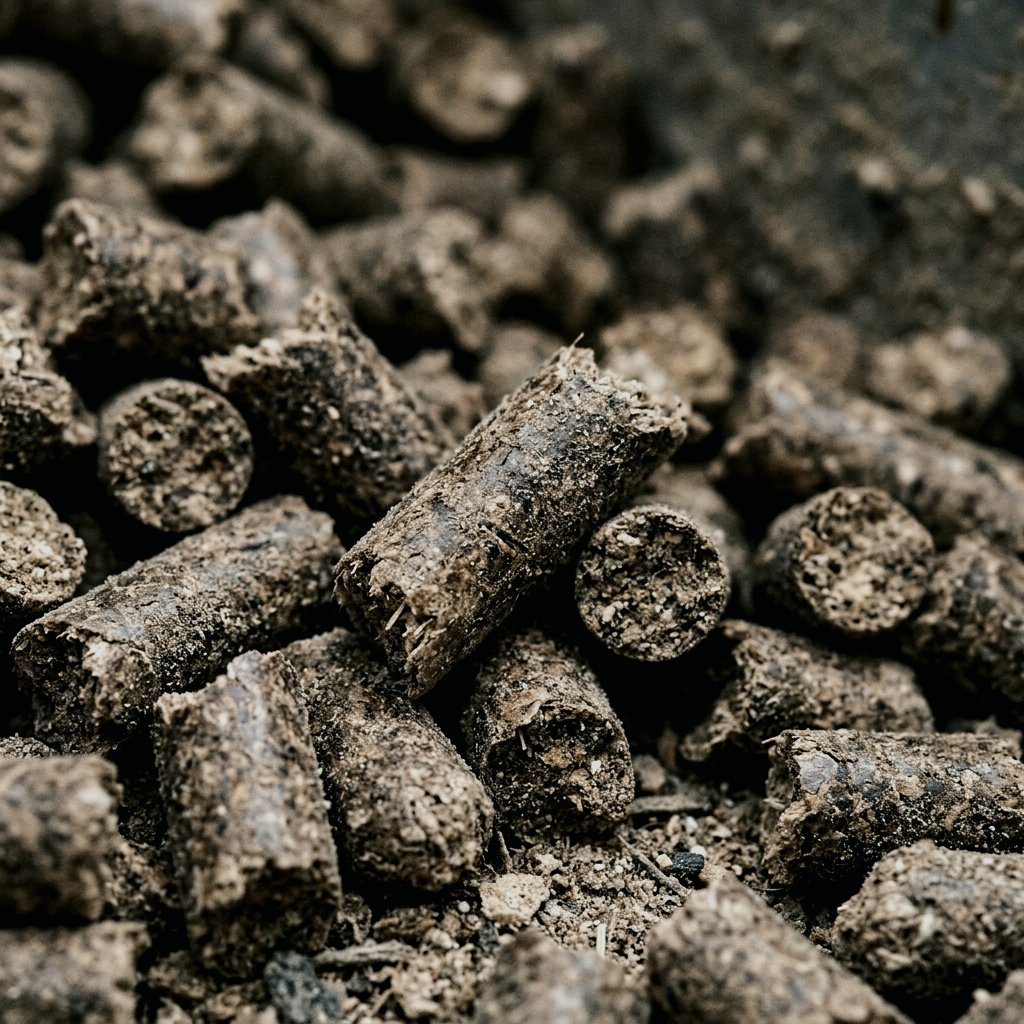
Close up of pelleted feed

THE PROBLEM WE SOLVE

You are asked to take gut health on trust.

Antibiotic reduction, feed at two-thirds of your cost base, and margins that move on a tenth of a point of FCR. Meanwhile most direct-fed microbials arrive as a species list with no strain, no count you can verify, and no evidence you can read.

A nutritionist cannot formulate around a black box. A buyer cannot defend one to a board.

So we publish what is in the sack, and what the evidence does and does not show.

OUR RANGE

Two products. One continuous strategy.

EKOSHIELD

EKOSHIELD

A pellet-stable additive for chicks, broilers and layers. Three defined organisms that hold microbial balance while the bird is working hardest.

Organisms
B. subtilis · B. licheniformis · E. faecium
Declared count
≥ 1.0 × 10⁹ CFU/g
Pelleting
> 95% survival at 90 °C / 30 min
EKOSTART

EKOSTART

A six-organism lactic acid bacteria consortium for pullets and pre-lay birds — put in early, while there is still an empty gut to occupy.

Organisms
Six-strain LAB consortium
Declared count
≥ 1.0 × 10⁹ CFU/g
Carrier
Calcium carbonate, feed grade

PEER-REVIEWED EFFICACY

N=189 FULL TEXTS ASSESSED | MULTI-STRAIN VALIDATION

We screened 4,423 records and read 189 full texts to decide which organisms earn a place in our products. The figures below are published, peer-reviewed results for these species, obtained by independent groups using their own strains. They are why we selected what we selected — not results from Ekome products.

1.71 → 1.55

Broiler FCR

Day-42 body weight +7.6% (2176 vs 2023 g, P = 0.003), B. subtilis.

Chen et al. 2025, Poultry Science

1.72 vs 1.81

Broiler FCR, 0–6 weeks

B. licheniformis, administered in water (P < 0.05).

Liu et al. 2012, AJAS

95.9% vs 94.3%

Hen-day egg production

Laying hens supplemented with B. subtilis (P = 0.048).

Chen et al. 2020, Poultry Science

2.08 vs 2.15

Feed per kg egg

Alongside improved shell strength and thickness (P = 0.001).

Wang et al. 2021, Poultry Science

1.97 vs 2.01

Layer FCR

P. acidilactici; egg weight 62.9 vs 62.1 g (P = 0.015).

Mikulski et al. 2020, Poultry Science

4,423

Records screened

PRISMA 2020 systematic review; 189 full texts assessed.

Ekome internal evidence review

Where the evidence is thin, we say so. Three organisms in our consortium have no species-level efficacy trial we consider clean, and no published study yet tests the full blend. Our technical team will walk you through the gaps as readily as the results.

WHY FEED MANUFACTURERS WORK WITH US

Specific, declared, and stable in your mill.

STRAIN TRANSPARENCY

Every organism identified, selected for a defined function, and declared at a guaranteed viable count. Strain designations are on the label and in the dossier.

No proprietary-blend black boxes

PELLETING STABILITY

EKOSHIELD is spore-forming and built for the mill. It survives standard commercial conditioning, so no post-pellet liquid application line is required.

> 95% survival, 90 °C for 30 min

EVIDENCE YOU CAN AUDIT

Certificates of Analysis on every batch, and a full reference list behind every claim we make. If a figure is not ours, we tell you whose it is.

CoA with each delivery

FORMULATION SUPPORT

We work alongside your nutrition team on inclusion rates, mill trials and trial design — as a technical partner, not a drop-shipper.

Trial design support included

“We don’t fight nature. We fortify it — and we prove it.”

STABILITY · RESILIENCE · EVIDENCE

START WITH THE EVIDENCE AND A CONVERSATION.

We issue the full technical dossier and the published evidence behind each formulation to feed manufacturers, integrators and distributors.

Tell us the species, the stage and the problem you are solving, and our technical team will respond within two working days.

WHAT YOU GET

  • The technical dossier — strain designations, inclusion rate and the batch Certificate of Analysis.
  • The systematic review and the published papers behind our formulations, including where we think the evidence is thin.
  • A conversation with someone technical about your mill conditions and how a trial worth running would be designed.
GET IN TOUCH